

LED recessed lights have gained significant popularity in recent years due to their numerous benefits for energy-efficient lighting solutions. These modern lighting fixtures not only provide enhanced illumination but also offer long-term cost savings and environmental advantages. In this article, we will explore the various advantages of LED recessed lights and discuss why they are a smart choice for businesses and homeowners looking to improve their lighting while minimizing energy consumption.
In today’s world, energy efficiency is a key consideration in every aspect of our lives. Lighting plays a crucial role in our daily activities, and by choosing energy-efficient options, we can reduce our environmental impact and save on energy costs. LED recessed lights are an excellent choice for those seeking to upgrade their lighting systems without compromising on quality or aesthetics. Let’s delve deeper into the benefits of these innovative lighting fixtures.
1. What are LED recessed lights?
LED recessed lights, also known as can lights or downlights, are fixtures that are installed into a ceiling or wall, creating a streamlined and unobtrusive lighting solution. Unlike traditional incandescent or fluorescent lights, LED recessed lights consist of light-emitting diodes (LEDs) that emit light when an electrical current passes through them. This technology offers numerous advantages over conventional lighting sources, making LED recessed lights the preferred choice for many.
2. Energy-efficient lighting and its importance
Energy-efficient lighting is designed to consume less electricity while providing sufficient illumination for various applications. By using lighting solutions that are optimized for energy efficiency, we can significantly reduce our energy consumption and, consequently, lower our carbon footprint. This is particularly important considering the increasing demand for electricity and the urgent need to mitigate climate change. LED recessed lights are at the forefront of energy-efficient lighting technologies, offering several benefits that make them stand out from traditional lighting options.
3. Advantages of LED recessed lights
Energy efficiency
LED recessed lights are highly energy-efficient, converting a greater percentage of electrical energy into light compared to traditional lighting options. They require less wattage to produce the same level of brightness, resulting in significant energy savings. This efficiency not only reduces electricity bills but also contributes to a greener and more sustainable environment.
Long lifespan
LED recessed lights have an exceptionally long lifespan compared to other lighting alternatives. On average, they can last up to 25 times longer than incandescent bulbs and significantly longer than fluorescent lights. This extended lifespan translates into reduced maintenance costs and fewer replacements, making LED recessed lights a cost-effective long-term investment.
Cost savings
Due to their energy efficiency and extended lifespan, LED recessed lights offer substantial cost savings over time. While the initial purchase cost may be higher than traditional lighting options, the long-term benefits far outweigh the upfront expense. Businesses and homeowners can expect to see a significant reduction in their electricity bills and maintenance expenses, leading to substantial savings in the long run.
Versatility in design
LED recessed lights are available in various sizes, shapes, and color temperatures, allowing for versatile design options to suit different aesthetics and requirements. Whether it’s for residential or commercial spaces, LED recessed lights can be customized to create the desired ambiance and lighting effects. They seamlessly blend into the ceiling or wall, providing a clean and modern look.
Improved lighting quality
LED recessed lights offer superior lighting quality compared to traditional lighting options. They provide bright, uniform illumination with minimal glare and flickering. LED technology allows for precise control over color temperature, allowing users to choose between warm, neutral, or cool white light. This flexibility enhances visual comfort and creates a pleasant environment for various activities.
4. Installation considerations
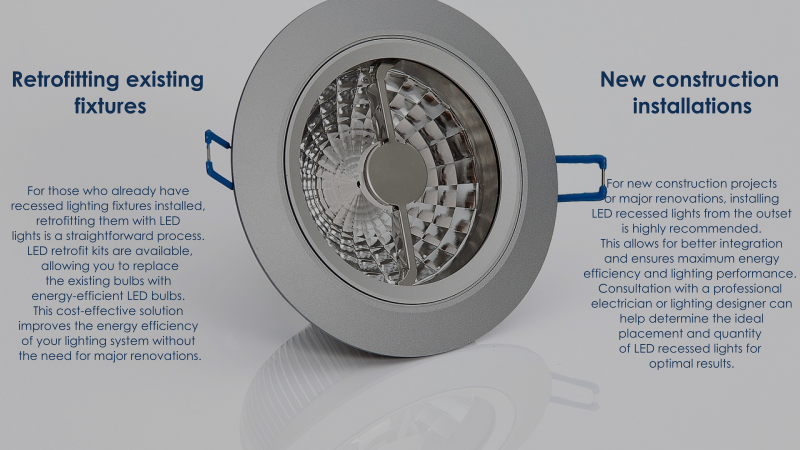
5. Factors to consider when purchasing LED recessed lights
When choosing LED recessed lights, several factors should be taken into consideration to ensure you select the right fixtures for your specific needs.
Lumens and brightness
Consider the desired brightness level and the number of lumens required for your space. Different applications may call for varying levels of brightness, so it’s important to choose LED recessed lights that provide adequate illumination.
Color temperature
LED lights come in a range of color temperatures, from warm white to cool white. The color temperature affects the ambiance and mood of a space. Warm white light creates a cozy and inviting atmosphere, while cool white light is often preferred for tasks that require focus and concentration.
Beam angle
The beam angle determines the spread of light emitted by the LED recessed lights. Narrow beam angles are suitable for accent lighting, while wider angles are ideal for general lighting purposes. Consider the intended use of the lights to select the appropriate beam angle.
Dimming capabilities
Check if the LED recessed lights are compatible with dimmer switches if you desire adjustable lighting levels. Dimming capabilities provide flexibility and allow for customization of lighting according to different activities or preferences.
CRI (Color Rendering Index)
The Color Rendering Index measures how accurately the light source renders colors compared to natural light. Higher CRI values indicate better color accuracy. For spaces where color representation is crucial, such as art galleries or retail stores, choosing LED recessed lights with a high CRI is essential.
6. Maintenance and durability of LED recessed lights
LED recessed lights require minimal maintenance compared to traditional lighting options. With their long lifespan and solid-state construction, they are more durable and less prone to breakage. LED lights do not contain fragile filaments or glass components, making them resistant to vibrations and impacts. This durability ensures that the lights can withstand the test of time and continue to perform reliably.
7. Environmental benefits
LED recessed lights have several environmental benefits that contribute to a greener and more sustainable future. Their energy efficiency reduces electricity consumption, resulting in lower greenhouse gas emissions and reduced reliance on non-renewable energy sources. Additionally, LED lights do not contain toxic substances like mercury, which is found in some traditional lighting options, making them safer for both human health and the environment.
8. Conclusion
LED recessed lights are an excellent choice for those seeking energy-efficient lighting solutions. Their numerous advantages, including energy efficiency, long lifespan, cost savings, versatility in design, and improved lighting quality, make them a smart investment for businesses and homeowners alike. With easy retrofitting options and considerations for new construction installations, LED recessed lights can be seamlessly integrated into any space. Factors such as lumens and brightness, color temperature, beam angle, dimming capabilities, and CRI should be taken into account when purchasing LED recessed lights to ensure they meet specific lighting requirements. LED lights require minimal maintenance, offer enhanced durability, and provide environmental benefits by reducing energy consumption and minimizing harmful substances.
In conclusion, LED recessed lights offer a range of benefits for energy-efficient lighting solutions. Their energy efficiency, long lifespan, and cost savings make them an attractive option for businesses and homeowners looking to reduce energy consumption and save on electricity bills. With their versatility in design, improved lighting quality, and compatibility with dimmers, LED recessed lights provide customizable lighting options for different spaces and activities. Their easy installation, low maintenance, and durability make them a long-term investment. Moreover, LED recessed lights contribute to a greener environment by reducing greenhouse gas emissions and eliminating toxic substances. By choosing LED recessed lights, businesses and homeowners can enjoy high-quality lighting while making a positive impact on both their finances and the planet.
9. FAQs
1. Are LED recessed lights more expensive than traditional lighting options? LED recessed lights may have a higher upfront cost compared to traditional lighting options. However, their energy efficiency and long lifespan result in significant cost savings in the long run due to reduced electricity bills and lower maintenance expenses.
2. Can LED recessed lights be used in existing fixtures? Yes, LED recessed lights can be retrofitted into existing fixtures. Retrofit kits are available to replace traditional bulbs with energy-efficient LED bulbs, making it a cost-effective way to upgrade your lighting system.
3. How long do LED recessed lights last? LED recessed lights have an exceptionally long lifespan, lasting up to 25 times longer than incandescent bulbs and significantly longer than fluorescent lights. This extended lifespan reduces the need for frequent replacements and maintenance.
4. Can LED recessed lights be dimmed? Yes, many LED recessed lights are compatible with dimmer switches, allowing you to adjust the brightness according to your preference or specific lighting requirements.
5. Are LED recessed lights environmentally friendly? Yes, LED recessed lights are environmentally friendly. They consume less energy, resulting in reduced greenhouse gas emissions. Additionally, they do not contain toxic substances such as mercury, making them safer for both human health and the environment.